AI-Powered Ecommerce Automation in 2025–2026: The No-Code Business Guide for SMBs
Running an ecommerce store today means juggling inventory, marketing, customer support, and endless back-office tasks. That’s where AI-powered ecommerce automation comes in.

Deepak
5 min read
September 22, 2025
The best part? In 2025, you don’t need coding expertise to harness it. Thanks to a new generation of no-code AI tools built for small and medium-sized businesses (SMBs), you can:
Boost sales without adding staff
Eliminate repetitive manual work
Deliver highly personalized shopping experiences
And all of this happens without writing a single line of code.
This guide shows how ecommerce automation is transforming operations from smarter inventory planning to tailored marketing and gives you step-by-step actions to get started today.
What the Latest Research Shows About AI Automation Adoption
Recent reports show that AI automation in ecommerce is far from speculative it’s already delivering real results:
According to SellersCommerce (2025), the AI-enabled ecommerce market is expected to reach $8.65 billion in 2025, up from ~$7.57B in 2024. SellersCommerce
DemandSage estimates the market is set to grow to $9.01 billion by end-2025, driven by strong year-on-year adoption. DemandSage
A Deloitte US report states that around 70% of retail executives plan to implement AI capabilities within the next year to better personalize customer experiences. Deloitte
These figures show that AI automation isn’t hype, it’s already boosting growth, improving personalization, and becoming a standard part of strategy for many ecommerce SMBs.
AI Technologies Revolutionizing Ecommerce for SMBs
Here are the most impactful and accessible AI technologies for small and medium-sized stores:
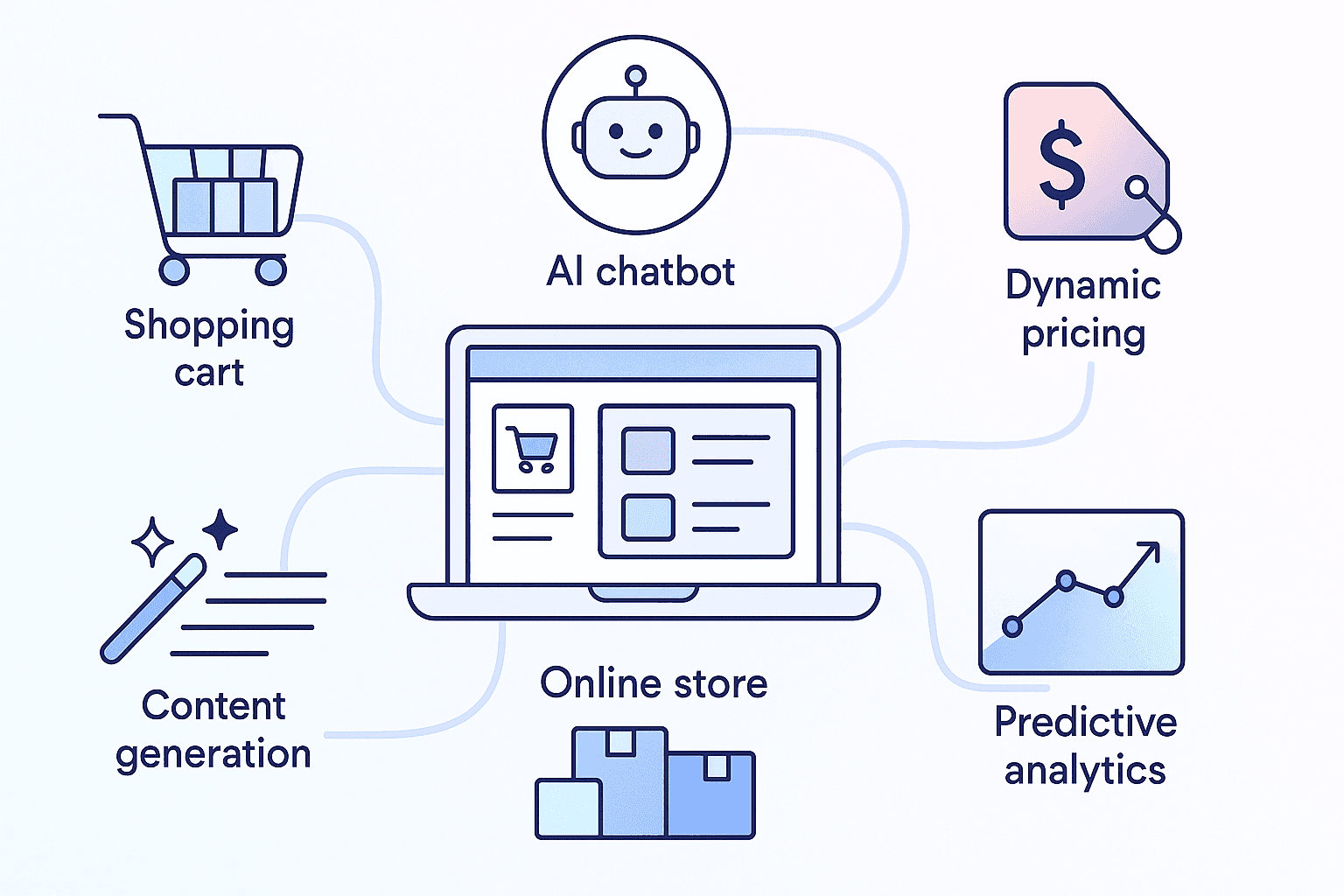
Machine Learning & Predictive Analytics : Forecast demand, reduce stockouts, and optimize fulfillment. Even smaller retailers can now use these insights, not just Amazon. For example, our guide on AI Data Analytics and Business Success explains how predictive insights can transform operations.
AI Chatbots & Conversational Agents : Tools like Rep AI for Shopify handle sales and support chats, saving time while recovering abandoned carts.
Dynamic Pricing Engines : Adjust prices in real time based on demand, competitor data, and seasonality, without messy spreadsheets.
Generative AI for Content : Automate product descriptions, marketing emails, and social content. According to a 2025 case study by MasterOfCode, retailers using generative AI chatbots saw double-digit engagement lifts.
No-Code AI Platforms : Platforms like Zygro.ai make all of this achievable with drag-and-drop automation, empowering SMBs to scale without developers.
Practical Examples: How AI Solves Ecommerce Challenges
Personalized Recommendations : Gymshark uses “People Also Bought” AI suggestions to increase average order value.
Inventory Forecasting : Indian fashion retailer Ajio reduced churn by implementing predictive demand analytics in 2024.
Customer Support Automation : SMBs using AI chatbots have cut FAQ tickets by up to 40%, freeing up human agents for complex cases.
Fraud Detection : PayPal’s AI-driven fraud detection (case study, 2025, via GrowthJockey) saved millions by identifying high-risk transactions early.
Content Generation :Shopify Sidekick, launched in 2024, helps merchants generate sales reports and campaign ideas instantly see how to apply these strategies in our post on using marketing insights to boost ecommerce sales.
How to Get Started with AI Ecommerce Automation: A Step-by-Step Approach

Evaluate Your Current Setup
Check if your ecommerce platform and data systems are ready. For example, our resource on making smarter ecommerce decisions covers how clean data fuels better automation.
Find Quick Wins
Start with low-risk automations like chatbots or abandoned cart recovery. For more, see our guide to growing your Shopify or WooCommerce store with proven strategies.
Choose No-Code AI Tools
Use platforms like Zygro.ai or Shopify-integrated apps.
Pilot Small Projects
Test, tweak, and expand once you see ROI.
Track Key Metrics
Measure conversion rates, support volume, and customer satisfaction.
Expand Gradually
Layer in advanced features such as predictive analytics or AI-driven SEO. If organic reach matters, check our guide to increasing ecommerce traffic with SEO.
Overcoming Common Barriers
Many SMBs hesitate due to cost or technical fears. But in 2025, modern AI tools are:
Affordable subscription-based rather than large upfront investments
User-friendly drag-and-drop workflows, no coding required
Supported tutorials, customer communities, and success teams included
Pro tip: Keep your sales, marketing, and inventory data clean and integrated this ensures your AI learns and performs effectively.
What’s Ahead: Ecommerce Automation Trends for 2025–2026
AI is moving toward autonomous optimization systems that manage pricing, marketing, and stock with minimal human oversight. Expect advances in:

Voice Shopping Customers ordering directly through smart assistants.
AR Product Discovery Virtual “try-before-you-buy” experiences.
Sustainable AI Algorithms that optimize logistics to reduce waste.
Hyper-Personalization Shoppers experiencing unique, tailored journeys at scale.
AI Automation Tools Comparison
Tool | No-Code Friendly | Core Features | Ideal For | Pricing Model |
|---|---|---|---|---|
Yes | Recommendations, dynamic pricing, chatbots, marketing automation | SMBs and mid-market ecommerce | Subscription | |
Yes | Sales + support chatbots for Shopify | DTC ecommerce brands | Subscription | |
Moderate | Predictive analytics, customer engagement | Mid-sized brands | Custom pricing | |
Yes | AI assistant for store management | Small–mid sized stores | Included in platform |
Frequently Asked Questions
What makes no-code AI tools different?
They allow non-developers to create automation visually, without technical skills.
Is AI automation cost-effective for SMBs?
Yes. According to Shopify’s 2025 report, most stores recoup costs quickly through higher sales and lower manual workloads.
How do I start as a non-technical store owner?
Begin with tools already built into your platform (like Shopify Magic or Zygro.ai) and automate repetitive tasks first.
Final Thought
The AI revolution in ecommerce is no longer a future trend, it’s happening right now, and it’s accessible to every business. From Amazon-level forecasting to Gymshark-style personalization, the tools once reserved for enterprise giants are now in reach for SMBs.
By starting small whether with a chatbot, smarter product recommendations, or AI-generated marketing you can unlock growth, cut down on busywork, and deliver shopping experiences your customers love.
Don’t wait until competitors are two years ahead. Try a no-code AI tool this month. Platforms like Zygro.ai make it simple to launch AI-powered recommendations, chatbots, and pricing automation without coding or hiring extra staff.