Data-Driven Marketing: Top Benefits, Real Examples & How to Use Customer Data for Growth with AI Personalization and Real-Time Analytics
Data-driven marketing is using real customer data, not guesswork or assumptions to create smarter, more personalized marketing strategies. Leveraging customer journey data, AI personalization marketing, and real-time analytics marketing lets brands deliver the right message to the right person at the exact right moment. This approach optimizes marketing budgets, boosts engagement, and accelerates business growth. Businesses that understand how to use customer data will thrive in the increasingly competitive digital landscape.

Deepak
6 min read
October 9, 2025
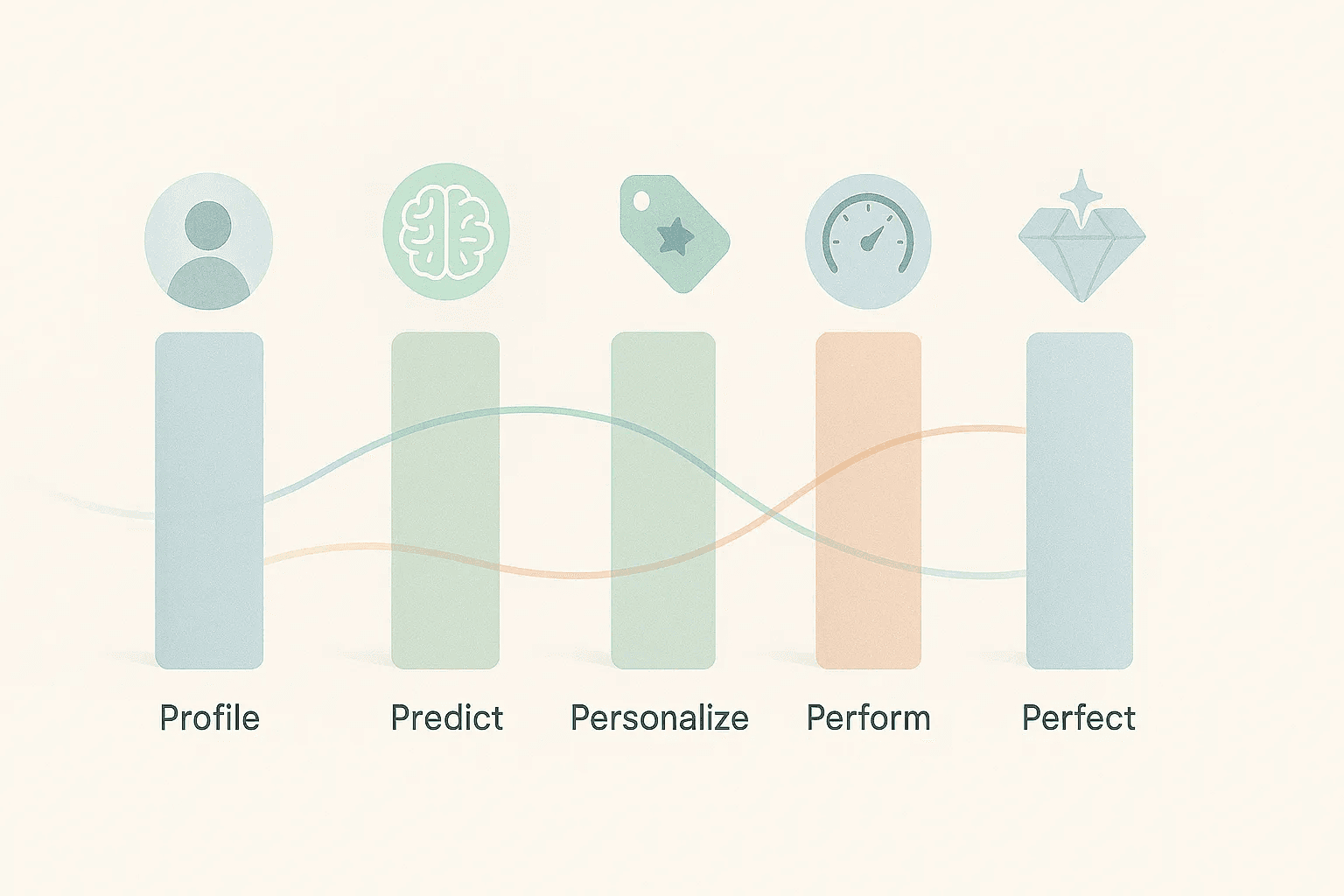
The 5P Model of Data Driven Marketing: Profile, Predict, Personalize, Perform, Perfect
To master data-driven marketing, follow this proprietary 5P framework:
1. Profile
Create detailed customer profiles with demographic, behavioral, and psychographic data collected from all touchpoints in the customer journey.
2. Predict
Use AI personalization marketing and real-time analytics marketing to forecast what customers want and anticipate their next move.
3. Personalize
Craft targeted campaigns using insights from AI-powered segmentation to customize messaging, offers, and channels for each customer segment.
4. Perform
Execute campaigns using robust tools such as Google Analytics, and Mailchimp, measuring key metrics in real-time.
5. Perfect
Continuously optimize campaigns with A/B testing, customer feedback, and iterative improvements to maximize ROI and lifetime customer value.
Top Benefits of Data-Driven Marketing with Customer Data
Hyper-Personalized Campaigns: Personalized marketing messages have up to 5X higher engagement rates. Learn actionable tactics in How to Use Marketing Insights to Boost Your E-Commerce Sales.
Optimized Marketing Spend: Focus your budget on high-impact campaigns to get better ROI.
Comprehensive Insights Into Customer Journey: From discovery to purchase, track and analyze every touchpoint.
Real-Time Campaign Adjustments: Quickly pivot marketing strategies based on real-time analytics marketing.
Sustained Business Growth: Better understanding and targeting lead to improved retention and customer lifetime value.
Real-World Data-Driven Marketing Success Stories
Spotify: Uses AI to craft personalized playlists, boosting user retention and engagement.
Amazon: Recommends products based on browsing and purchase history, improving conversion rates.
Netflix: Personalizes content suggestions with machine learning, increasing watch time.
Olay’s #killerskin Campaign: Leveraged social and search data to create viral marketing success (source).
Best Tools for Data-Driven Marketing (Free & Paid)
Tool Name | Purpose | Pricing | Notes |
|---|---|---|---|
Google Analytics | Website visitor tracking | Free | Industry standard for web analytics |
Supaboard | No-code AI-powered dashboards | Free & Paid | AI insights with collaboration tools |
HubSpot Marketing Hub | Marketing automation + CRM | Free & Paid | Integrated sales and marketing |
Mailchimp | Email marketing & automation | Free & Paid | Scalable for all business sizes |
Tableau | Advanced data visualization | Paid | BI for in-depth marketing insights |
AI analytics for e-commerce | Paid | Smart decisions with AI-powered e-commerce insights |
Step-by-Step Mini Example: How a Small Shopify Store Doubled Sales Using Email & Website Data
Data Collection: Shopify analytics track visitor behavior; Mailchimp tracks email opens and clicks.
Audience Segmentation: Customers who browsed but didn’t buy receive personalized, limited-time discount emails.
Timing Optimization: Real-time analytics marketing tools identify mid-week afternoons as optimal email send times.
Performance Monitoring: Dashboards track click-through and conversion rates, enabling quick tweaks.
Result: Within three months, targeted personalization and timing improvements led to a 2X rise in sales.
Common Challenges in Data-Driven Marketing
While data-driven marketing offers substantial benefits, businesses face significant challenges:
Data Quality & Integration: Low-quality, inconsistent, or siloed data leads to misleading insights. Unified customer views require integrated platform.
Privacy Compliance: Navigating regulations like GDPR and CCPA is complex. Ensuring transparent, ethical data use is essential to maintaining customer trust.
Skill Gaps: The specialized skills needed for effective data analysis and AI-driven marketing are in high demand but short supply.
Technology Overload: Choosing and mastering the right tools amidst rapidly evolving digital platforms can overwhelm teams.
Analysis Paralysis: Massive volumes of data can stall decision-making without focused KPIs and simplified dashboards.
Addressing these challenges with strategic team training, robust data governance, and scalable technology stacks is critical to success in 2025 and beyond.
Mistakes to Avoid in Data-Driven Marketing
Ignoring Data Privacy: Misuse of customer data can cause legal penalties and reputation damage.
Relying Solely on Data Without Context: Data should inform, not replace, human intuition and creativity.
Overlooking Data Silos: Without breaking down departmental barriers, insights remain fragmented and incomplete.
Neglecting Continuous Learning: Marketing teams must stay updated on evolving technologies and analytical methods.
Forgetting End Goals: Data collection and analysis should always align with clear business objectives.

FAQs Section
What is real-time analytics marketing?
Real-time analytics marketing uses live data dashboards and tools to monitor campaign performance and customer behavior as events unfold, enabling marketers to adjust strategies instantly for maximum effectiveness.
How does AI personalization improve sales?
AI personalization analyzes customer data to tailor marketing messages and product recommendations uniquely to each individual, increasing relevance, engagement, and ultimately driving higher sales conversions.
Which tools are best for small businesses?
Free and affordable tools like Google Analytics, Mailchimp, and the free tier of Zygro are excellent choices for small businesses to start tracking data and creating data-driven campaigns effectively.